In January 2023, Oracle replaced its usage-based Java pricing with an employee-based model (Oracle Java SE Universal Subscription FAQ). Below we cover the history and the terms that apply today.
January 2019: Oracle Changes the Rules on Java
Firstly, it's important to understand that Oracle Java is a widely-used programming language that's used for building applications and software solutions. Before 2019, Oracle's Binary Code License allowed free general-purpose business use of the Oracle JDK. Public updates of Oracle JDK 8 for business users ended in January 2019, and Oracle JDK releases from April 16, 2019 were provided under the Oracle Technology Network (OTN) License Agreement for Java SE, which permits personal and development use but requires a subscription or other Oracle entitlement for most commercial production use (Oracle Java SE Licensing FAQ). Starting with Oracle JDK 17 in September 2021, Oracle provides its latest releases under the Oracle No-Fee Terms and Conditions (NFTC) license, which permits free use, including commercial and production use, until one year after the next long-term support release (Oracle). OpenJDK builds remain available under the open-source GPL license. Licensing therefore depends on which Oracle JDK release you run and the license it was received under.
Key Resource: Our Previous Blog Post on 2019 Oracle Java Changes
Historically, the legacy Java SE Subscription was priced by usage: $2.50 per Named User Plus per month ($30 per year) for desktops and $25 per Processor per month ($300 per year) for servers, at the lowest volume tier (Oracle). Oracle's Processor metric is not one physical server: where the relevant Processor definition requires it, processors are counted as cores multiplied by Oracle's applicable core factor, so a single server can require several Processor licenses.
On January 23, 2023, Oracle Changed the Rules Again
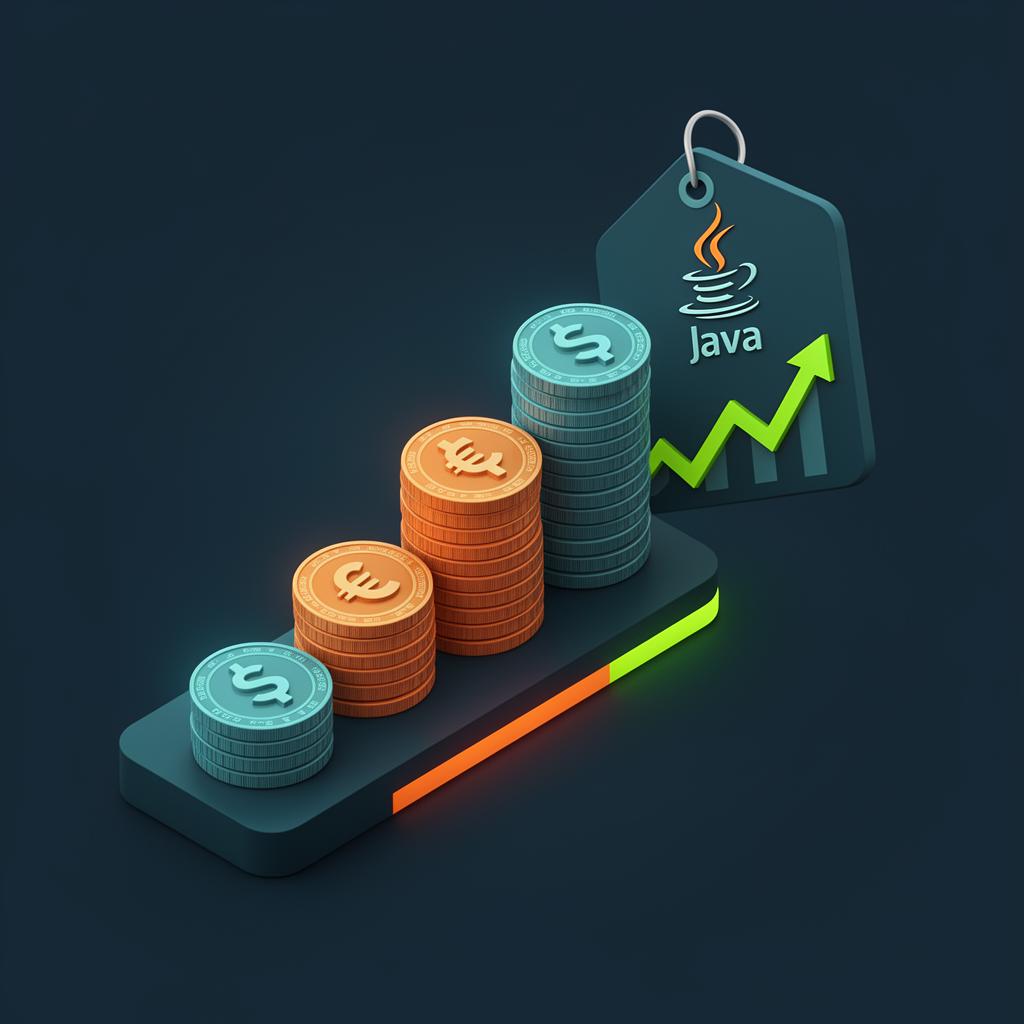
Oracle replaced the legacy subscriptions with the Java SE Universal Subscription, priced by the "Employee for Java SE Universal Subscription" metric, which is independent of how many people actually use Java (Oracle Java SE Universal Subscription FAQ). Oracle defines Employees as (i) all of your full-time, part-time and temporary employees, and (ii) all of the full-time, part-time and temporary employees of your agents, contractors, outsourcers and consultants that support your internal business operations (Oracle Java SE Universal Subscription Global Price List). Contractor and consultant staff count only where they support your internal business operations. List prices start at $15 per employee per month ($180 per year) for organizations with fewer than 1,000 employees and fall to $5.25 per month at 40,000-49,999 employees (Oracle Java SE Universal Subscription Global Price List).
Whether commercial use requires a separate Oracle Java subscription depends on the distribution, exact release and update, the license under which that build was obtained, and any existing entitlement. Oracle JDK builds obtained under NFTC permit commercial and production use within those terms; OpenJDK distributions have their own licenses. For Oracle JDK builds under OTN, commercial production use outside the permitted uses generally requires a Java subscription or another applicable Oracle entitlement. Confirm that position before budgeting for a separate subscription (Oracle Java SE Licensing FAQ).
Current Oracle JDK Free-Use Status (October 2026)
Oracle JDK 25 updates are planned to remain available under the NFTC until October 2028. Oracle JDK 21 updates released through September 2026 remain under the NFTC; beginning with the October 2026 Critical Patch Update, Oracle plans to offer new Oracle JDK 21 updates under the Java SE OTN license, the same license used for Oracle JDK 8, 11 and 17 updates (Oracle). This applies to new updates only; it does not retroactively change the license of previously released NFTC builds. Existing Oracle entitlements, such as Java used as part of another Oracle product, and permitted OTN uses can affect whether a separate subscription is needed (Oracle Java SE Support Roadmap).
Alternatively, you could explore the use of alternatives to Oracle Java, such as OpenJDK or Azul Java. While these solutions may offer different levels of support and different frequencies of updates, they can still be a viable option for organizations looking to reduce their IT costs.
Oracle Java Pricing Comparison
Here's a side-by-side comparison of the cost implications before and after the 2023 Oracle Java changes, using list prices (legacy: $30 per desktop user and $300 per processor per year; current: $180 per employee per year):
| Scenario Description | Employees | Java Desktop Users | Java Installed Processors | Legacy Model (before Jan 2023) | Universal Subscription (current list price) | Percentage Increase |
|---|---|---|---|---|---|---|
| Small Java Footprint | 100 | 15 | 4 | $1,650/year | $18,000/year | approximately 990.9% |
| Large Java Footprint | 100 | 100 | 30 | $12,000/year | $18,000/year | 50% |
Oracle Java Pricing Chart by Employee Count
| Employee Count | Yearly Cost Per Employee | Annual Cost (Low Range) | Annual Cost (High Range) |
|---|---|---|---|
| 1-999 | $180 | $180 | $179,820 |
| 1,000-2,999 | $144 | $144,000 | $431,856 |
| 3,000-9,999 | $126 | $378,000 | $1,259,874 |
| 10,000-19,999 | $99 | $990,000 | $1,979,901 |
| 20,000-29,999 | $81 | $1,620,000 | $2,429,919 |
| 30,000-39,999 | $68.40 | $2,052,000 | $2,735,931.60 |
| 40,000-49,999 | $63 | $2,520,000 | $3,149,937 |
| 50,000+ | Contact Oracle | — | — |
What Should You Do Next?
- Audit your Java usage: Understand exactly where and how Java is deployed in your organization.
- Calculate your exposure: Use the pricing tables above to estimate your potential costs under the new model.
- Evaluate alternatives: OpenJDK, Azul, Amazon Corretto, and other distributions may reduce or eliminate your Oracle dependency.
- Negotiate strategically: If you must license, don't accept list price—volume discounts and alternative structures exist.
- Get expert advice: Java licensing is complex; independent specialists can help you avoid costly mistakes.