
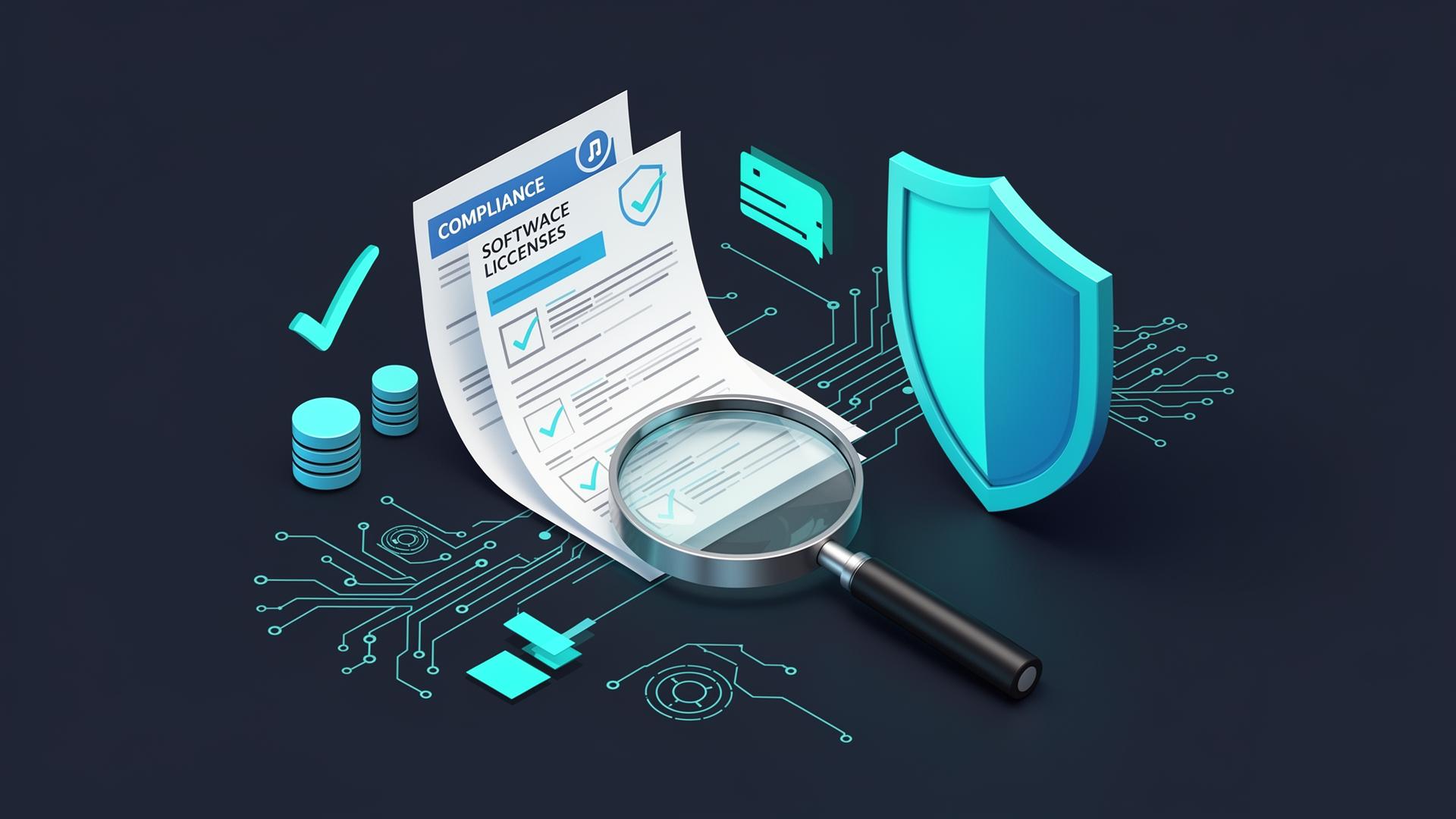
What Is a Software License Audit?
A software license audit is a formal process where a software vendor reviews your organization's usage of their software to ensure compliance with licensing agreements. During an audit, the vendor compares your actual software deployments against your purchased license entitlements to identify any gaps or unauthorized usage.
Software audits are fundamentally about revenue. As Gartner noted: "Vendor-imposed and revenue-motivated audits are increasing for organizations of all sizes and industries." The more license audits a software vendor performs, the more revenue they typically obtain. This is big business for enterprise vendors like Oracle, Microsoft, VMware, IBM, and SAP.
of enterprises audited in the past year
increase in $1M+ settlements since 2023
found third-party help beneficial
Source: 2025 Software Compliance Survey
If your organization fails an audit, consequences can include significant financial penalties, unexpected costs to purchase additional licenses, service disruptions, and damaged vendor relationships. Understanding the audit process and your rights is critical for managing risk.
Types of Software Audits
Not all audits are created equal. Understanding the distinction between audit types helps you respond appropriately:
Soft Audit (Stealth Audit)
An informal compliance review disguised as helpful license optimization. Often comes from sales teams under the guise of "helping you with your licensing." Like a submarine, it can surface from nowhere and strike.
- No formal notification required
- Often initiated by sales teams
- Information shared can trigger official audits
- Treat with same caution as formal audits
Official Audit
A formal audit request from the vendor's licensing organization (e.g., Oracle GLAS, Microsoft SAM). Comes with written notice and specific contractual requirements.
- Formal written notification (typically 45 days)
- Defined scope and timeline
- Contractual obligations apply
- You have specific rights and protections
Important Warning
No matter how innocent questions seem or how helpful the source appears, treat soft audits like official requests. One wrong answer can escalate into a formal audit, and information provided during soft audits can be used against you later.
Common Audit Triggers
Software audits are not random events. Vendors focus their audit efforts where they expect the highest financial return. Understanding these triggers helps you anticipate and prepare for potential audits.
| Trigger Event | Why It Triggers Audits | Risk Level |
|---|---|---|
| VMware or Server Refresh | Deploying new hardware or virtualization often triggers vendor scrutiny | High |
| Merger, Acquisition, or Divestiture | License transfer issues and incorrect assumptions about entitlements | Very High |
| ULA/ELA Termination | Exiting unlimited license agreements creates immediate compliance gaps | Very High |
| Support Cancellation | Terminating vendor support contracts often prompts audit activity | High |
| Time Since Last Audit | Companies are typically audited every 3-6 years; longer gaps increase risk | Medium |
| Lost Commercial Bid | Losing a major deal to a competitor can trigger retaliatory audits | Medium |
| Java Downloads | Oracle actively audits organizations with significant Java download history | High |
The "sweet spot" for software audits is companies with 250-1,000 employees—big enough to have substantial compliance gaps but small enough to lack resources for effective pushback. According to research, 83% of companies in this size range reported being audited within three years.
The Software License Audit Process
Understanding the typical audit process helps you know what to expect and where you can influence outcomes:
Official Audit Notification
You receive formal written notice (typically 45 days). The goal is to verify your licensing position and establish your current usage baseline.
💡 Do not ignore this. You have a contractual right to request postponement if timing impacts business operations.
Audit Kick-Off Meeting
The vendor defines the audit scope and timeline. Listen carefully and be non-committal beyond stating intent to cooperate reasonably.
💡 Limit scope as much as possible. Do not volunteer additional information.
Intake Questionnaire
You're asked to complete a questionnaire about your Oracle environment, infrastructure, and software usage.
💡 Only provide information that is 'reasonably requested' and needed to measure software use. Wrong answers can expand scope.
Data Collection (OSW/Scripts)
You may be asked to complete a server worksheet and run vendor-provided scripts to collect deployment data.
💡 Review what scripts collect. You may not be contractually required to run them, and they often collect more than necessary.
Draft Audit Findings
After 4-6 weeks of analysis, the vendor presents draft findings showing alleged compliance gaps.
💡 Expect sticker shock. Initial claims are often inflated by 80-95%. This is when negotiations begin.
Final Resolution
Through negotiation, you work toward a resolution that may include license purchases, architecture changes, or dispute resolution.
💡 Expert representation at this stage dramatically improves outcomes. Don't accept draft findings as final.
How to Prepare for a Software License Audit
The best defense against a software audit is proactive preparation. Even if you're not currently facing an audit, these steps strengthen your compliance posture:
Establish Your Effective License Position (ELP)
Document your actual deployments versus purchased entitlements before vendors come knocking.
Centralize License Documentation
Maintain organized records of all agreements, purchase orders, and entitlements in one accessible location.
Implement Discovery Tools
Use software asset management tools to continuously track deployments and usage across your environment.
Review Contracts Carefully
Understand your audit rights, obligations, and any special terms that affect compliance calculations.
Address Known Gaps Proactively
If you identify compliance issues, remediate them before an audit makes them leverage for the vendor.
Document Architecture Decisions
Keep records of virtualization strategies, cloud deployments, and configuration decisions that impact licensing.
What to Do During a Software Audit
Once an audit begins, your actions significantly impact the outcome. Follow these critical guidelines:
✅ Do:
- Designate a single point of contact — All vendor communication should flow through one person
- Control internal communications — Notify employees that all vendor inquiries go through the designated contact
- Stop non-essential vendor purchases — Freeze purchases (except support renewals) during the audit
- Document everything — Keep detailed records of all communications and data shared
- Engage expert help early — The sooner you involve specialists, the better your outcomes
- Review draft findings carefully — Initial claims are negotiable and often contain errors
❌ Don't:
- Don't panic — Measured responses achieve better outcomes than reactive ones
- Don't overshare information — Provide only what's contractually required
- Don't accept initial findings as final — Claims are typically inflated by 80-95%
- Don't let vendors access systems directly — You control what data is provided
- Don't make architectural changes during the audit — You must notify vendors of environment changes
- Don't assume vendor policies are contractual — Policies like Oracle's Partitioning Policy are not contracts
Your Rights During a Software Audit
While vendors have contractual audit rights, you also have significant protections. Understanding these rights is essential for managing the audit effectively:
Reasonable Timing
Audits shall not unreasonably interfere with normal business operations. You can request postponement during critical business periods.
Scope Limitation
Audits should be limited to the products and timeframes specified. Resist scope creep beyond contractual requirements.
Data Protection
You control what data is shared. Vendors often request more than they're entitled to receive.
Dispute Resolution
You can challenge findings you disagree with. Draft findings are not final and can be negotiated.
Remember: vendor policies (like Oracle's Partitioning Policy) often contain fine print stating they are for "educational purposes" and "may not be incorporated into any contract." Policies are not the same as contractual obligations.
Vendor-Specific Audit Considerations
Each major software vendor has unique audit tactics, contract structures, and focus areas:
Oracle →
VMware/virtualization, Java SE, database options
Oracle audits typically result in highest settlement costs
Microsoft →
Cloud compliance, hybrid environments, EA reviews
SAM engagements can escalate to formal audits
IBM →
Sub-capacity rules, Red Hat, license complexity
ILMT deployment is critical for sub-capacity licensing
VMware →
Subscription transitions, Broadcom changes
Audit activity increasing post-Broadcom acquisition
SAP →
Indirect access, S/4HANA transitions, LAC audits
Indirect access remains highly contentious
When to Get Expert Help
Internal teams typically lack specialized licensing expertise and negotiation experience. Vendors conduct thousands of audits—they know every tactic. Consider engaging third-party experts when:
- You've received an audit notice (formal or soft)
- The audit scope includes complex areas like virtualization or cloud
- You suspect significant compliance gaps exist
- The vendor is Oracle (highest average settlement costs)
- You're approaching ULA/ELA certification or renewal
- You're going through M&A activity
- Initial audit findings seem unreasonably high
Need Audit Defense Help?
95% of organizations that used third-party help found it beneficial. The earlier you engage, the better your outcomes.
Frequently Asked Questions
Ready to Strengthen Your Audit Defense?
Download our comprehensive Oracle Audit Survival Guide for detailed strategies, or speak with our experts about your specific situation.