New Guidance in Oracle's Licensing Metrics Affects Certain Hardware Architectures
Oracle has made a subtle but important addition to its Software Licensing Basics document, specifically in how it defines processor licensing for Standard Edition 2 (SE2) customers.
Here's the updated language:
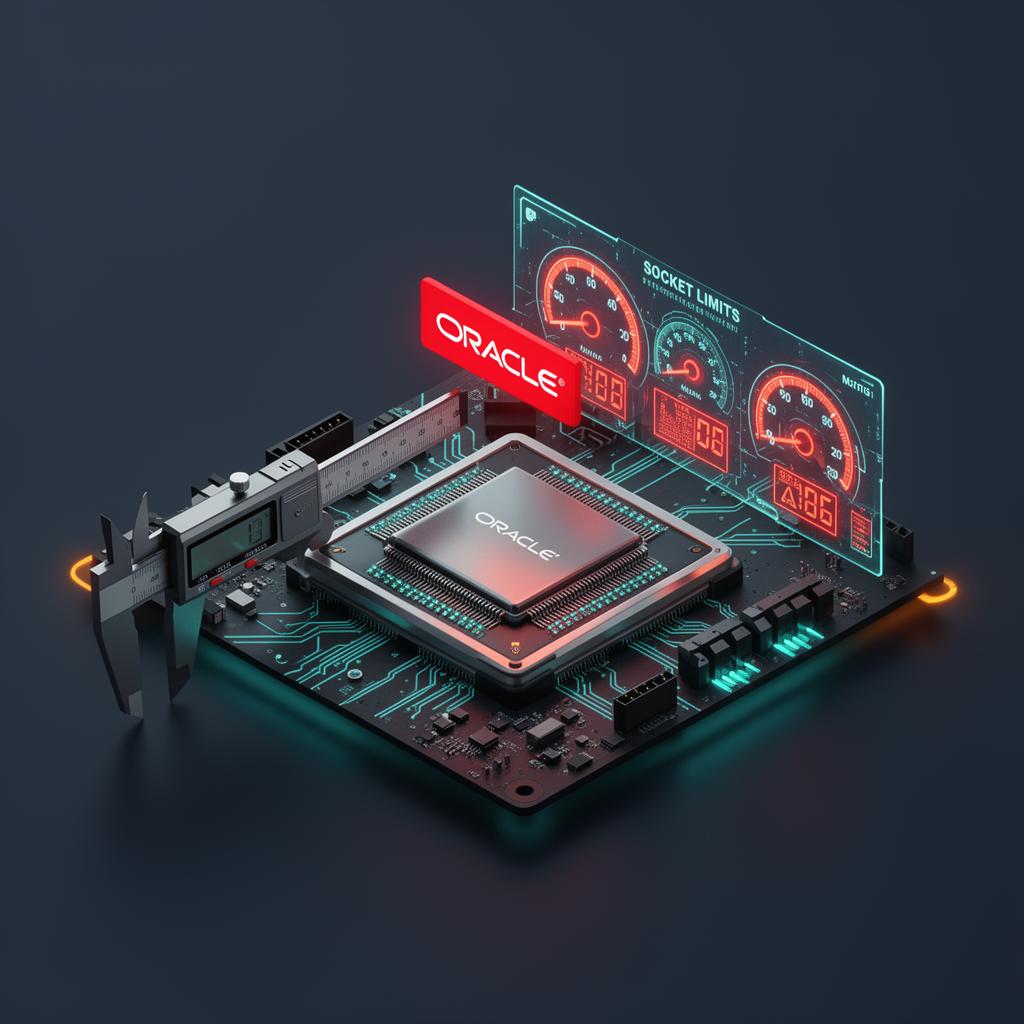
"Most processor manufacturers offer Multi-chip Module (MCM) processors. For SE2 licensing purposes each chip on an MCM counts as an occupied socket. It is the customer's responsibility to check with the processor vendor to determine the number of chips on each MCM processor."
This clarification does not apply universally—but it does affect customers running Oracle SE2 on certain IBM Power and AMD EPYC CPUs, which frequently use Multi-Chip Module (MCM) designs.
What Is a Multi-Chip Module (MCM)?
Multi-Chip Module (MCM) processors are made up of two or more physical silicon chips—often referred to as "chiplets"—packaged together into what appears to be a single CPU. This architecture is commonly used in:
- IBM Power processors, such as Power9 and Power10
- AMD EPYC series, particularly EPYC Rome and Milan
Despite appearing as a single processor, Oracle now considers each chip within the MCM to be its own occupied socket for SE2 licensing.
Why It Matters for SE2 Customers
Oracle Database SE2 is licensed per socket, and the product is limited to a maximum of two sockets per server. Under the clarified guidance:
- A single AMD EPYC CPU with two chiplets = two sockets
- Two such processors = four sockets—exceeding SE2's limit
This means that customers running SE2 on certain IBM or AMD servers could now be viewed as out of compliance, even if they only have two physical processor packages installed.
Common Scenarios Affected
| Server Configuration | CPU Architecture | Chiplets per CPU | Oracle Socket Count | SE2 Compliant? |
|---|---|---|---|---|
| 2 Intel Xeon (monolithic) CPUs | Non-MCM | 1 | 2 | ✅ Yes |
| 1 AMD EPYC (Rome/Milan) CPU | MCM | 2 | 2 | ✅ Yes |
| 2 AMD EPYC (Rome/Milan) CPUs | MCM | 2 | 4 | ❌ No |
| 2 IBM Power9 CPUs | MCM | Varies | Often >2 | ❌ No |
Oracle's Expectation: You Must Confirm
Oracle places the responsibility for chip-count verification squarely on the customer:
"It is the customer's responsibility to check with the processor vendor to determine the number of chips on each MCM processor."
That means IT and licensing teams must now account for how processor architecture affects socket-based licensing—even if the hardware has already been in place for years.
What Could Non-Compliance Cost?
If you're running Oracle SE2 on MCM processors that exceed the two-socket limit, Oracle may require you to:
- Upgrade to Enterprise Edition
- License by core, not by socket
- Pay for support retroactively
For example, running two AMD EPYC processors (16 cores each) could trigger:
| Item | Estimated Cost |
|---|---|
| Oracle EE licenses (16 cores × core factor) | $760,000 |
| 3 years of backdated support | $501,600 |
| Total exposure | $1.26 million |
These figures assume list pricing and no discounts, which is common in audit scenarios. Actual amounts vary based on hardware configuration and Oracle's enforcement approach.
Recommended Steps
1. Identify Your Processor Type
Check whether your infrastructure includes IBM Power CPUs or AMD EPYC processors. Review manufacturer documentation to confirm whether MCM architecture is in use and how many chips are involved.
2. Reassess Your SE2 Licensing Scope
If your server exceeds Oracle's updated two-socket definition due to MCM design, you'll need to explore licensing alternatives such as:
- Migrating to Oracle Enterprise Edition (EE) with core-based licensing
- Reconfiguring workloads on compliant hardware
3. Document Your Environment
Maintaining documentation of hardware architecture and how you interpret Oracle's licensing rules can be helpful in audit scenarios or internal reviews.
4. Seek Expert Input
If you're unsure about your compliance standing, working with a trusted licensing advisor can help prevent unnecessary risk or overspending.
Final Thoughts
This change doesn't affect all Oracle SE2 users—but for those relying on IBM or AMD processors with MCM architecture, the impact can be significant. The interpretation change was quietly introduced but has real-world licensing consequences.
If you're concerned about how this affects your environment, our team can help review your setup and identify the best path forward.